
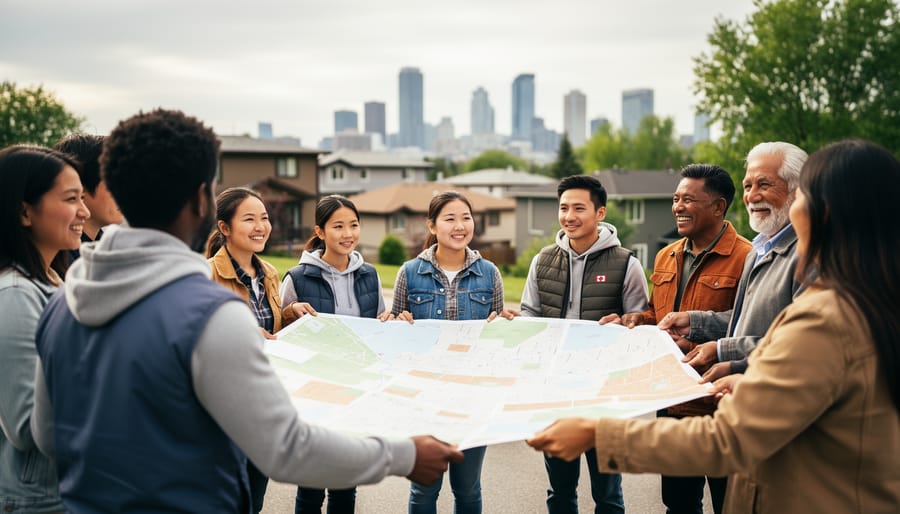
United Way creates community impact by mobilizing networks of donors, volunteers, and local organizations to address root causes of social issues through coordinated, data-driven interventions that traditional charity models cannot achieve alone. Rather than simply distributing funds to individual programs, United Way orchestrates collective action across sectors, bringing together governments, businesses, nonprofits, and community members to tackle complex challenges like homelessness, food insecurity, and educational gaps. This collaborative approach generates measurable outcomes because it attacks problems from multiple angles simultaneously while pooling resources that no single organization could marshal independently.
The model matters particularly for Indigenous communities across Canada, where decades of colonial policies have created interconnected barriers to wellbeing that demand coordinated, culturally grounded responses. When United Way chapters partner with Indigenous-led organizations, the definition matters because funding structures must respect community governance, traditional knowledge systems, and self-determination rather than imposing external metrics of success.
What distinguishes United Way’s community impact framework is its commitment to measuring outcomes, not just outputs. Instead of counting meals served or coats distributed, the organization tracks whether families achieve stable housing, whether children improve literacy rates, whether youth find meaningful employment. This requires years of sustained investment in the same communities, building trust and infrastructure that short-term grants cannot provide.
The approach works because it addresses a fundamental weakness in the philanthropic sector: fragmentation. Individual charities often compete for the same limited dollars while tackling symptoms of poverty, illness, or inequality in isolation. United Way shifts the conversation from competition to collaboration, creating shared goals and accountability structures that align diverse stakeholders toward common benchmarks of community health.
Understanding the Community Impact Model
Community impact moves beyond the traditional charity model of providing immediate relief to address why problems exist in the first place. While donating winter coats helps families stay warm this season, community impact asks why those families lack stable income to buy coats themselves, then works to change that reality.
United Way structures its community impact work around three interconnected pillars that research shows determine life trajectories: education, income stability, and health. A child who reads at grade level by third grade is four times more likely to graduate high school. An adult with stable employment can afford housing and healthcare. Good health enables workforce participation. These aren’t isolated issues, they reinforce each other in cycles that either trap families in poverty or launch them toward opportunity.
The approach relies on what experts call a collective impact model which brings together organizations that would normally compete for funding to work toward shared goals. Instead of twenty agencies each running separate after-school programs with different curricula and no communication, collective impact means those agencies align their efforts, share data on what works, and hold each other accountable for measurable improvements in student achievement.
- Collective Impact
- A framework where organizations from different sectors commit to a common agenda, shared measurement, and coordinated action to solve complex social problems that no single entity can address alone.
- Systems Change
- Altering the underlying structures, policies, and power dynamics that create social inequities, rather than treating the symptoms of those inequities through services alone.
- Community Mobilization
- Engaging residents, businesses, government, and organizations as active participants in identifying priorities and implementing solutions, ensuring those most affected lead the work.
- Outcome Measurement
- Tracking long-term changes in people’s lives, like employment rates or literacy levels, rather than counting activities such as workshops delivered or meals served.
This data-driven approach means United Way can demonstrate that collaborative investments in early childhood literacy programs across a city reduced third-grade reading failure by eighteen percent over three years, not just that volunteers read to 5,000 children. The focus shifts from how much money flowed to how many lives changed, creating accountability that strengthens trust with donors and communities alike.
Building Collaborative Networks That Drive Change
Cross-Sector Partnerships in Action
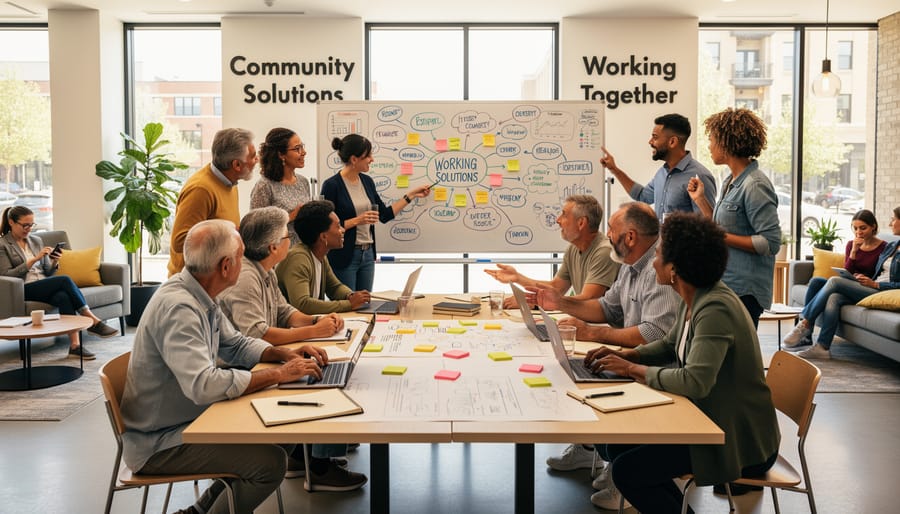
In Edmonton, United Way Alberta Capital Region brought together the city government, Alberta Health Services, and the Confederacy of Treaty Six First Nations to address chronic homelessness. Rather than duplicating services, these partners mapped existing resources and identified gaps. The collaboration created a coordinated intake system that reduced wait times by 40% and connected 600 people to stable housing in two years. What made this work was the Treaty Six communities maintaining full control over culturally appropriate support services for Indigenous clients while accessing shared funding and infrastructure.
A similar partnership in Vancouver saw United Way Lower Mainland connect Musqueam, Squamish, and Tsleil-Waututh First Nations with the provincial ministry of children and family development. The nations designed their own child welfare protocols within the partnership framework. Non-Indigenous agencies provided administrative support and funding coordination, but decision-making authority remained with Indigenous governance structures. This reversed decades of top-down intervention.
These examples reveal a pattern: effective cross-sector partnerships don’t ask Indigenous organizations to fit into existing systems. They rebuild systems around Indigenous self-determination. United Way’s role becomes facilitator rather than director, connecting resources, navigating bureaucracy, and ensuring partners honor commitments to cultural protocols. When a Winnipeg partnership faced resistance from a corporate funder uncomfortable with Indigenous-led priority setting, United Way defended community authority and found alternative funding. That willingness to protect partnership principles separates performative collaboration from genuine systems change.
Community Voice as the Foundation
United Way’s community impact work starts with a fundamental principle: those experiencing challenges firsthand hold the most valuable expertise about what solutions will actually work. Rather than designing programs in boardrooms and rolling them out to communities, United Way facilitates processes where community members shape priorities, strategies, and success measures from the ground up.
This approach shows up in community planning tables where people with lived experience of poverty, housing insecurity, or systemic barriers sit alongside funders and service providers, not as token participants, but as equal decision-makers who help allocate resources and set direction. In Indigenous communities, this means supporting nation-led development priorities identified through traditional governance structures, not predetermined external agendas.
United Way’s role shifts from directive to facilitative: providing convening power, resources, and infrastructure while stepping back to let communities lead. When a neighbourhood identifies youth employment as their top concern, residents themselves define what meaningful employment looks like in their cultural context and determine which barriers matter most. This process takes longer than top-down programming, but creates solutions that communities actually want and sustain beyond initial funding cycles.
Measuring What Matters: From Outputs to Outcomes
For decades, charitable organizations measured success by inputs: dollars raised, volunteers mobilized, programs funded. United Way fundamentally challenged this approach by asking a different question, not “how much did we do?” but “what actually changed for people?” This shift from outputs to outcomes marks a departure from traditional philanthropy, focusing measurement on whether families achieved stable housing, whether children improved literacy skills, or whether communities reduced food insecurity rates.
Outcome-based evaluation requires tracking real transformation over time rather than counting activities. Instead of reporting “500 meals served,” United Way measures whether families experiencing food insecurity gained reliable access to nutrition, whether their children’s health improved, and whether parents secured stable employment. This demands sophisticated data collection across partner organizations, longitudinal tracking of individual and community progress, and willingness to adjust strategies when evidence shows an approach isn’t working.
The model relies on shared measurement systems where diverse organizations track common indicators. When multiple agencies serving the same community agree on what success looks like, reduced poverty rates, improved high school completion, decreased emergency room visits, they can coordinate efforts and identify what drives change. Data sharing agreements between United Way, service providers, schools, and health authorities create a comprehensive picture of community well-being that no single organization could capture alone.
Accountability mechanisms extend beyond financial audits to community-reported outcomes. United Way publishes transparent progress reports showing which targets were met, which fell short, and what communities identified as community-led priorities for the following year. This evidence-based approach lets funders, volunteers, and community members see tangible returns on their investment, not in abstract program numbers, but in lives genuinely improved and systemic barriers reduced.
Indigenous Community Development Through United Way Partnerships
Success Story: Supporting Indigenous Youth Education Initiatives
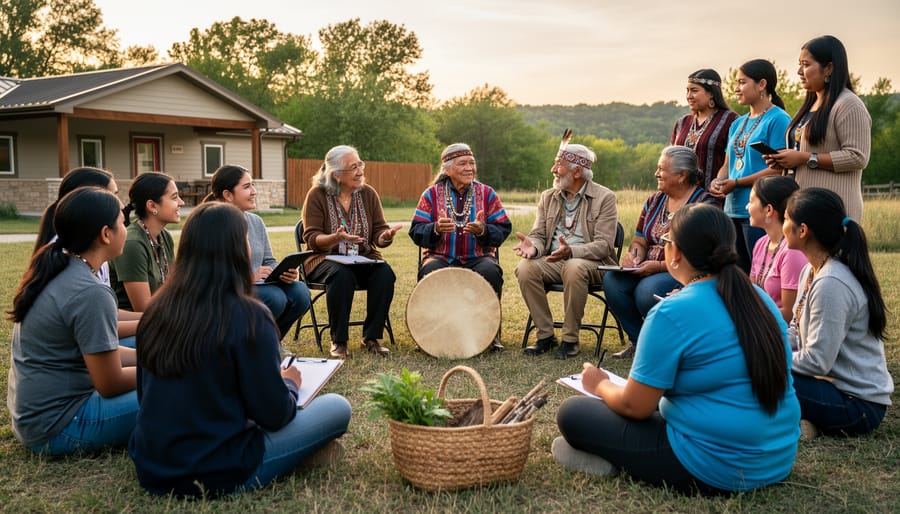
In northern Alberta, a United Way partnership with the Lesser Slave Lake Indian Regional Council demonstrates the transformative power of community-led design in Indigenous youth education. The initiative emerged directly from conversations with Elders, parents, and students who identified that standard tutoring programs failed to engage youth struggling academically.
Rather than importing external solutions, United Way provided funding and coordination support while community members designed the program structure. The resulting model integrated traditional knowledge alongside academic support. Students met weekly with both certified teachers and knowledge keepers, learning Cree language and cultural practices while working on math, science, and literacy skills. Study sessions often took place on the land, connecting abstract concepts to tangible experiences like measuring traplines for geometry lessons or documenting medicinal plant harvesting for biology projects.
Within two years, participating students showed measurable gains. High school completion rates among program participants increased by thirty-two percent compared to the previous five-year average. More significantly, youth reported stronger cultural identity and increased confidence in navigating both Indigenous and mainstream educational systems.
The program’s success stemmed from genuine partnership principles. United Way contributed resources and helped connect the council with provincial education officials, but decision-making authority remained with the community. When funding cycles required reporting, United Way worked with the council to develop culturally appropriate evaluation methods that honored oral tradition alongside written documentation.
This case illustrates how effective Indigenous youth programming requires patient relationship-building, respect for community expertise, and willingness to adapt funder requirements to support community-determined priorities rather than imposing external frameworks.
Reconciliation in Practice
United Way’s reconciliation efforts extend beyond symbolic gestures to structural changes in how partnerships form and operate. Many regional United Ways have adopted formal policies requiring all community impact initiatives involving Indigenous communities to align with the Truth and Reconciliation Commission’s Calls to Action, particularly those addressing health disparities, education equity, and preserving cultural heritage.
This means conducting thorough cultural safety training for staff before entering partnerships, compensating Indigenous Elders and knowledge keepers for their guidance, and building decision-making timelines that respect community consultation processes rather than imposing external deadlines. Several United Ways now reserve seats on their community impact councils specifically for Indigenous leadership, ensuring these voices shape funding priorities from the start.
The organization acknowledges that reconciliation requires uncomfortable conversations about historical harms and ongoing inequities. Rather than positioning themselves as experts, United Way branches increasingly adopt a learning stance, asking Indigenous partners what support looks like rather than prescribing solutions. This shift has led to funding models that provide multi-year commitments instead of annual grants, recognizing that meaningful community transformation cannot happen within arbitrary fiscal cycles.
Addressing Systemic Barriers to Community Well-being

United Way recognizes that handing out food hampers or hosting clothing drives, while helpful, won’t end poverty. Real community well-being requires dismantling the systems that create hardship in the first place. Rather than merely treating symptoms, United Way targets the structural barriers that keep people trapped in cycles of disadvantage, affordable housing shortages, wage stagnation, inadequate mental health infrastructure, and discriminatory policies that limit opportunity.
This systems-level approach means United Way doesn’t just fund emergency shelters. They advocate for zoning reform that allows more affordable housing construction, push employers to adopt living wages, and pressure governments to invest in mental health resources before crises occur. It’s slower work than filling immediate needs, but it creates lasting change that benefits entire communities rather than individuals one at a time.
Across Canada, United Way chapters identify and confront barriers that prevent community members from thriving:
- Affordable housing gaps that force families to choose between rent and food
- Income inequality perpetuated by precarious work and inadequate minimum wages
- Access to mental health services limited by long wait times and geographic barriers
- Educational disparities rooted in neighbourhood funding inequities and cultural exclusion
- Employment barriers including discrimination, lack of credential recognition, and inadequate childcare
These challenges don’t exist in isolation. A single-parent working two part-time jobs faces interconnected barriers: unstable income makes affordable housing unattainable, housing insecurity disrupts children’s education, stress triggers mental health struggles, and lack of benefits prevents treatment. United Way understands these connections and designs interventions that address multiple barriers simultaneously.
In practice, this might look like convening municipal officials, developers, Indigenous housing authorities, and community advocates to redesign housing policy. Or partnering with employers and settlement agencies to create pathways for newcomers facing credential barriers. United Way uses its convening power to bring decision-makers face-to-face with community members experiencing systemic exclusion, making abstract policy debates concrete and urgent.
The organization also recognizes that some barriers are deliberately constructed. Discriminatory hiring practices, policies that criminalize poverty, and systems that ignore Indigenous sovereignty aren’t accidents, they’re structural inequities requiring intentional dismantling. United Way supports advocacy campaigns led by affected communities, lending organizational weight to calls for policy reform while ensuring those most impacted control the narrative and strategy.
This work demands patience. Changing a municipal bylaw takes longer than distributing winter coats. But when that bylaw allows affordable housing development, it prevents homelessness for generations.
Mobilizing Community Resources and Volunteer Power
United Way’s strength lies not just in fundraising, but in transforming ordinary community members into powerful agents of change. While financial contributions provide critical resources, the organization has built sophisticated systems to activate what community development experts call “asset-based approaches”, leveraging existing skills, relationships, and resources that already exist within communities.
Skilled volunteering programs match professionals with non-profits needing specific expertise. An accountant might spend evenings helping a youth mentorship program build sustainable budgets. A graphic designer volunteers their talent to help an Indigenous language revitalization project create compelling educational materials. This approach delivers value that money alone cannot buy, while building personal connections that often lead to deeper, long-term community engagement.
Corporate partnerships extend beyond cheque-writing to workplace campaigns where employees coordinate fundraising drives, organize volunteer teams, and leverage their company’s networks. United Way facilitates these relationships, ensuring corporate volunteers work on projects aligned with community-identified needs rather than what looks good in annual reports. A tech company might provide digital literacy training in underserved neighbourhoods. A construction firm could offer skilled trades mentorship to youth facing employment barriers.
In-kind contributions, donated meeting spaces, pro bono legal services, surplus equipment from businesses, stretch every dollar further. United Way acts as the connector, identifying which organizations need specific resources and which community partners can provide them.
Grassroots engagement activates networks often overlooked by traditional philanthropy. Neighbourhood champions organize hyperlocal initiatives. Faith communities mobilize their congregations. Cultural associations bring community-specific knowledge and trust. This distributed model ensures impact work reflects genuine community priorities rather than top-down assumptions about what people need.
Lessons for Other Philanthropic Organizations
United Way’s community impact model offers several transferable lessons for organizations seeking to move beyond traditional grant-making. The first is that meaningful change requires longer funding cycles than most philanthropic organizations currently offer. While annual grants create predictable cash flow problems for community partners, multi-year commitments allow organizations to invest in capacity building, staff retention, and sustained programming that addresses root causes rather than symptoms.
Trust-based philanthropy emerges as a second critical principle. Rather than imposing rigid reporting requirements that consume partner resources, effective funders streamline accountability measures and trust community organizations to know their constituents best. This approach proves particularly important when working with Indigenous-led initiatives, where Western evaluation frameworks may not capture culturally specific outcomes or honour community ways of knowing.
Shared measurement represents another crucial shift. Organizations benefit from developing common indicators across funded partners while remaining flexible enough to accommodate community-specific metrics. This balance allows for aggregate impact reporting without forcing diverse initiatives into one-size-fits-all frameworks that miss nuanced outcomes.
Funders should also recognize that convening power matters as much as capital. Creating spaces where non-profits, government agencies, businesses, and community leaders can collaborate produces solutions no single organization could achieve alone. Supporting youth in social change initiatives and ensuring marginalized voices shape strategy from the outset prevents extractive relationships disguised as partnership.
Finally, Canadian organizations must integrate reconciliation principles into all community work. This means more than acknowledging traditional territories. It requires redistributing resources toward Indigenous-led solutions, respecting self-determination in program design, and understanding that effective partnership takes time to build through consistent relationship and cultural learning.
United Way’s community impact model demonstrates that lasting change emerges from communities themselves, not from external solutions imposed upon them. By prioritizing collaborative networks, outcome measurement, and the voices of those most affected by social challenges, this approach has created a blueprint for sustainable development that contrasts sharply with traditional charity models.
The emphasis on Indigenous leadership and self-determination within United Way partnerships offers a particularly instructive example for Canadian philanthropic organizations. Respecting sovereignty, building relationships through cultural protocols, and centering community-identified priorities aren’t just ethical imperatives, they produce more effective, enduring results. When Indigenous communities design and lead their own solutions with appropriate support, they address root causes in ways that external interventions cannot.
For educators, NGO leaders, and policymakers seeking to strengthen community development work, the lessons are clear. Sustainable impact requires patience to build authentic partnerships, humility to follow rather than lead when communities have expertise, and commitment to measuring what actually matters to people’s lives. Cross-sector collaboration, while demanding more coordination upfront, multiplies resources and tackles systemic barriers that isolated efforts cannot overcome.
The question facing Canadian philanthropy isn’t whether to adopt community-driven approaches, but how quickly organizations can transition from donors to partners. Consider where your organization currently operates on that spectrum. Are you listening to communities or prescribing solutions? Are you building capacity for long-term change or providing temporary relief? The answers to these questions will determine whether your work creates dependency or catalyzes transformation.