
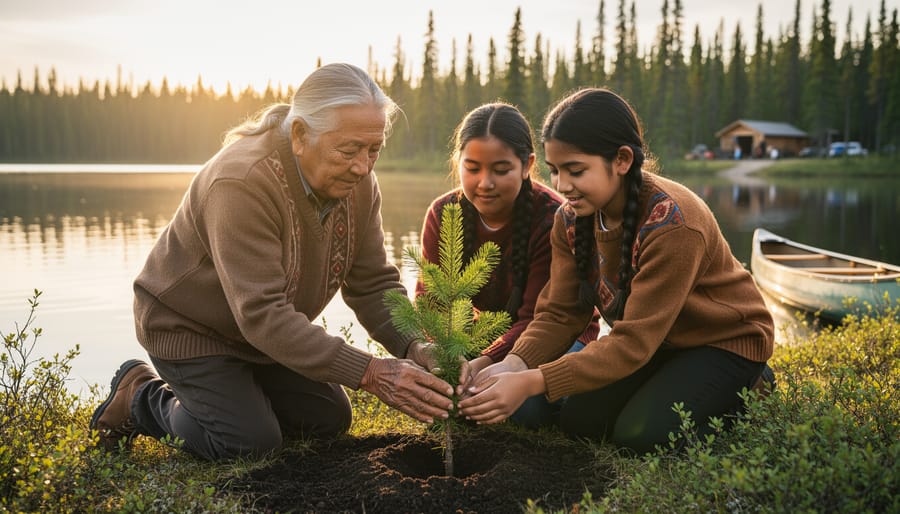
Indigenous youth represent the fastest-growing demographic in Canada, yet they face disproportionate barriers to education, employment, and wellbeing. Philanthropic organizations hold immense potential to shift these realities—but only when their approaches honor Indigenous self-determination, culture, and community wisdom.
Center Indigenous voices in every decision. Effective philanthropy begins by asking Indigenous youth and communities what they need rather than imposing external solutions. Successful initiatives consistently partner with Indigenous-led organizations who understand local contexts, cultural protocols, and the unique strengths young people bring. This means funding flows directly to Indigenous communities, with decision-making power residing where it belongs.
Invest in holistic, long-term programming. One-time donations or short project cycles rarely create lasting change. Fund multi-year initiatives that address interconnected needs—mental health support alongside cultural programming, educational resources combined with land-based learning, leadership development integrated with career pathways. Indigenous approaches recognize that wellbeing encompasses physical, emotional, mental, and spiritual dimensions.
Support cultural reconnection as foundational. For many Indigenous youth, reclaiming language, ceremony, and traditional knowledge provides the strongest foundation for resilience and success. Philanthropic funding that prioritizes cultural programs acknowledges that Indigenous identity is a source of strength, not a barrier to overcome.
Measure success through community-defined outcomes. Replace colonial metrics of achievement with indicators that reflect Indigenous values and priorities. Communities themselves should determine what success looks like, whether that means language retention rates, connection to Elders, land stewardship activities, or other culturally meaningful measures.
When philanthropy genuinely partners with Indigenous communities, respecting their leadership and vision, transformative change becomes possible for the next generation.
The Reality Indigenous Youth Face Today
Indigenous youth across Canada stand at a unique intersection of cultural heritage and contemporary opportunity. Today’s generation of Indigenous young people demonstrates remarkable resilience while navigating complex realities that demand thoughtful philanthropic attention.
Educational participation among Indigenous youth has increased significantly over the past decade, yet meaningful gaps persist. Many young people in remote and northern communities access schools with fewer resources, limited technology infrastructure, and teacher shortages. The transition to post-secondary education presents additional hurdles, with Indigenous students often balancing financial constraints, family responsibilities, and the experience of leaving close-knit communities for urban institutions. However, these challenges reveal clear pathways for strategic philanthropic investment in mentorship programs, scholarship funds, and culturally responsive educational initiatives.
Economic participation presents both obstacles and emerging possibilities. While unemployment rates remain higher for Indigenous youth compared to national averages, a growing number of young entrepreneurs are building businesses rooted in traditional knowledge and contemporary innovation. From sustainable tourism ventures to technology startups, Indigenous youth are creating economic opportunities that honor their heritage while engaging with modern markets. Philanthropic support for business incubators, skills training, and seed funding can amplify this entrepreneurial momentum.
Cultural connection serves as a profound source of strength for Indigenous youth. Many are actively reclaiming languages, participating in traditional ceremonies, and asserting their identities with pride. This cultural grounding provides resilience and direction, yet not all young people have equal access to these anchoring experiences. Supporting land-based learning programs, Elder mentorship initiatives, and cultural camps enables youth to strengthen their roots while reaching toward their aspirations.
The reality Indigenous youth face today is not defined by deficits but by potential waiting to be unlocked. With approximately 46 percent of the Indigenous population under age 25, this demographic represents an extraordinary opportunity for Canada. Strategic philanthropic engagement that respects Indigenous leadership, supports community-determined priorities, and commits to long-term partnership can help ensure these young people thrive as the leaders, innovators, and changemakers they are meant to become.
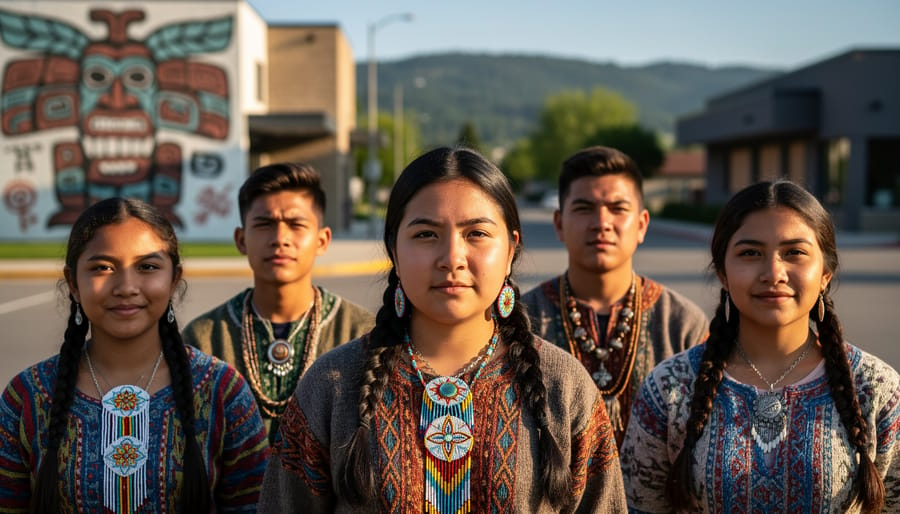
Why Traditional Philanthropy Falls Short
For decades, well-intentioned philanthropic efforts have struggled to create lasting positive change in Indigenous communities. The fundamental issue lies not in a lack of generosity, but in approaches that overlook the unique needs, strengths, and cultural contexts of the communities they aim to serve.
Traditional philanthropy has historically operated through a top-down model, where decisions about funding priorities and program design occur in boardrooms far removed from the communities being supported. External funders, often unfamiliar with Indigenous cultures, languages, and governance systems, determine what problems need solving and how solutions should look. This approach inadvertently perpetuates colonial patterns, positioning Indigenous communities as passive recipients rather than active partners in their own development.
The consequences of this disconnect are significant. Programs designed without meaningful community input frequently fail to address root causes or align with cultural values. A youth mentorship initiative, for example, might overlook the critical role of Elders in traditional knowledge transfer, or a leadership program might impose Western governance models that conflict with consensus-based Indigenous decision-making practices.
Short-term funding cycles compound these challenges. Meaningful change in communities requires sustained commitment, yet many philanthropic grants operate on annual or biennial timelines. This creates constant uncertainty, preventing organizations from planning long-term strategies or building the stable infrastructure needed for success. Staff turnover increases, relationships fracture, and programs rarely achieve their full potential before funding disappears.
Furthermore, restrictive funding guidelines often prevent Indigenous organizations from addressing interconnected issues holistically. Separating youth programming from family support, cultural revitalization from education, or mental health from land-based activities ignores the integrated nature of Indigenous worldviews.
The evidence is clear: philanthropic models must transform. Indigenous-led approaches, grounded in community knowledge and sustained by respectful partnerships, offer a more promising path forward—one that honors self-determination while supporting the next generation of Indigenous leaders.
The New Model: Indigenous-Led Philanthropic Initiatives
Community-Driven Funding Decisions
A transformative shift is occurring in how philanthropic dollars reach Indigenous youth programs. Rather than external funders making decisions about community needs, progressive organizations are transferring decision-making authority directly to Indigenous communities themselves. This trust-based approach recognizes that community members possess the most intimate knowledge of what their young people require to thrive.
Several Canadian foundations have pioneered innovative funding models that exemplify this shift. These models typically involve establishing Indigenous-led advisory committees or granting circles where community members evaluate proposals, set priorities, and allocate resources. The process honors traditional governance structures and incorporates cultural protocols, ensuring funding decisions align with Indigenous values and long-term community visions.
One particularly successful example involves unrestricted, multi-year funding that allows communities to respond flexibly to emerging needs rather than being constrained by rigid program requirements. Communities report that this flexibility enables them to support youth initiatives ranging from land-based learning programs to mental health services designed within cultural frameworks.
The benefits extend beyond individual programs. When Indigenous youth witness their communities wielding genuine decision-making power, they observe self-determination in action. This modeling strengthens youth identity and demonstrates that their communities are capable stewards of their own futures. Additionally, community-driven funding builds local capacity in grant administration, financial management, and program evaluation—skills that benefit the entire community ecosystem. This approach fundamentally reimagines the relationship between philanthropy and Indigenous communities, replacing colonial patterns of control with genuine partnership rooted in respect and trust.
Cultural Revitalization Through Giving
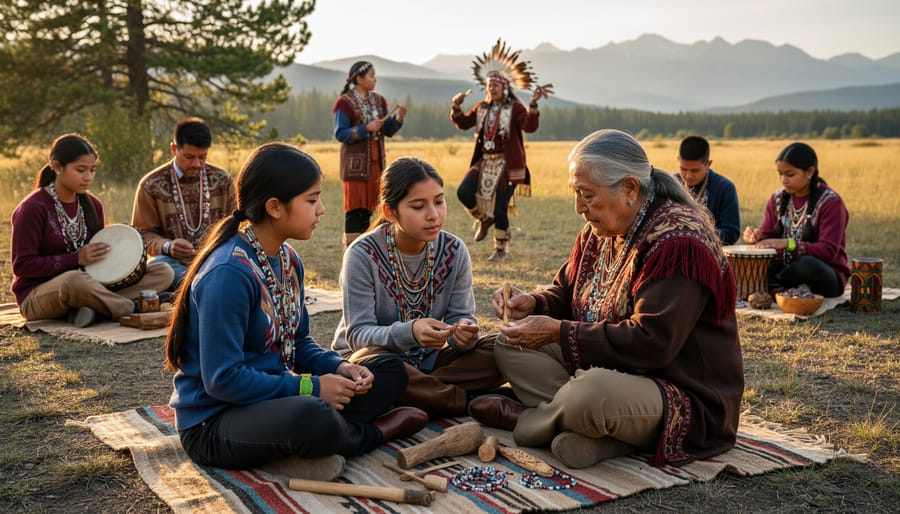
Philanthropic investment in cultural revitalization creates transformative opportunities for Indigenous youth to reclaim their heritage and strengthen their sense of identity. Across Canada, funding initiatives support language immersion programs where Elders work alongside young people, passing down ancestral knowledge that might otherwise be lost. These intergenerational exchanges do more than preserve vocabulary—they transmit worldviews, values, and connections to the land that form the foundation of cultural identity.
Cultural camps represent another vital area receiving philanthropic support. In these land-based settings, youth learn traditional practices like hide tanning, medicinal plant harvesting, and ceremonial protocols. Programs funded by foundations and individual donors provide resources for transportation, materials, and honoraria for knowledge keepers who dedicate time to teaching. Participants consistently report increased confidence, pride in their heritage, and stronger connections to their communities.
One particularly successful example involves a multi-year funding commitment that enabled a First Nation community in Northern Ontario to operate year-round language classes. Within three years, the number of fluent youth speakers doubled, and graduates began teaching younger children, creating a sustainable cycle of knowledge transmission. The program also documented traditional stories and songs, ensuring cultural preservation for future generations.
Supporting these initiatives requires funders to embrace patient, long-term investment. Cultural revitalization cannot be measured by typical grant timelines. When philanthropic organizations respect Indigenous timelines and community priorities, they become genuine partners in healing and empowerment, helping youth build the cultural foundation necessary for lifelong success and community leadership.
Multi-Year, Flexible Funding Commitments
Long-term, flexible funding represents a transformative shift in how philanthropy can support Indigenous youth organizations. Traditional grant structures, often limited to one-year cycles with restrictive parameters, force organizations to spend valuable time reapplying for funding rather than serving their communities. Multi-year commitments—ideally spanning three to five years—allow Indigenous-led organizations to hire stable staff, develop comprehensive programs, and build the infrastructure necessary for lasting impact.
Unrestricted funding proves equally vital. When donors trust Indigenous communities to identify and address their own priorities, organizations can respond organically to emerging needs and opportunities. This flexibility honors the principle that community members understand their challenges and solutions better than external funders. For example, an organization might redirect resources from pre-planned workshops to support a youth-led land-based initiative that emerges mid-year, responding authentically to what young people are requesting.
This approach also reduces the administrative burden of detailed reporting requirements that often accompany restricted grants. Instead, funders and organizations can focus on relationship-building and genuine accountability measures that center community-defined success indicators. By committing to sustained, flexible support, philanthropic organizations demonstrate respect for Indigenous self-determination and create conditions where youth-focused initiatives can truly flourish.
Success Stories: Indigenous Youth Thriving Through Philanthropic Support
When philanthropic investment truly centers Indigenous voices and priorities, the results speak for themselves. Across Canada, thoughtful partnerships between funders and Indigenous communities are creating pathways for young people to reclaim their identities, pursue their dreams, and strengthen their nations.
In northern Manitoba, the Indigenous Youth Leadership Circle demonstrates what collaborative philanthropy can achieve. Launched through a partnership between a national foundation and five First Nations communities, this program has supported over 200 youth aged 15-25 since 2019. Participants design and lead community projects addressing issues they’ve identified themselves, from language revitalization to mental health peer support networks.
Kiera Wastesicoot, now 22, joined the program at seventeen feeling disconnected from her Cree heritage. Through the Circle’s mentorship and project funding, she created a digital storytelling initiative that paired Elders with youth to record traditional knowledge. “The program didn’t just give us money,” Kiera explains. “They trusted us to lead. They asked what we needed instead of telling us what we should do. That trust changed everything for me.” Today, Kiera attends university while continuing her storytelling work, which has archived over 150 hours of Elder teachings and engaged 45 youth participants.
The program’s success stems from its foundation in Indigenous self-determination. Community advisory councils, composed entirely of Indigenous members, guide all funding decisions. Youth receive not only financial support but also cultural mentoring, skill-building workshops designed with community input, and connections to Indigenous professionals. Outcomes include a 78 percent post-secondary enrollment rate among participants and documented increases in cultural connection and community engagement.
On the West Coast, the Coast Salish Youth Entrepreneurship Fund illustrates how economic empowerment and cultural revitalization can intertwine. This collaborative initiative between philanthropic organizations and twelve Coast Salish Nations provides seed funding and business mentorship for youth-led enterprises rooted in traditional practices. Twenty-three businesses have launched since 2020, including art studios, traditional food enterprises, and cultural tourism initiatives.
Marcus George started a cedar weaving business through the fund at nineteen. “Learning business skills while learning from my grandmother about our weaving traditions brought everything together,” he shares. His business now employs three other young people and provides cultural workshops to schools.
These stories illuminate essential truths about effective philanthropy: success requires patience, relationship-building, and genuine power-sharing. When philanthropic organizations position themselves as partners rather than saviors, and when Indigenous youth have agency in shaping their futures, transformation becomes possible. The ripple effects extend beyond individual youth, strengthening entire communities and preserving cultural knowledge for generations ahead.
What Philanthropists and Organizations Can Do Right Now
Building Authentic Relationships
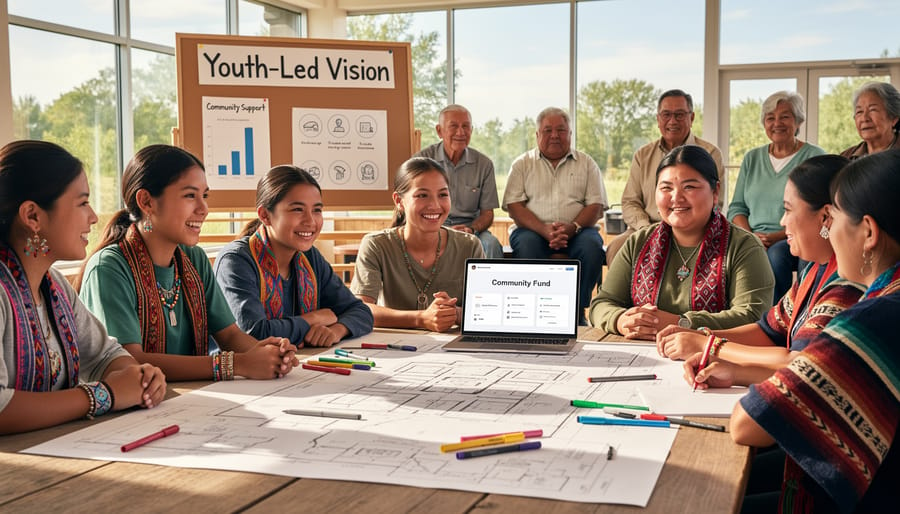
Authentic relationships with Indigenous communities form the foundation of effective youth philanthropy. This process begins with meaningful listening sessions where community members—particularly Elders, youth, and families—share their priorities, aspirations, and concerns without predetermined agendas. Philanthropic organizations must approach these conversations with humility, recognizing that communities themselves are the experts on their needs.
Cultural competency development represents an ongoing commitment, not a one-time training exercise. This includes learning about local protocols, understanding the historical context of colonial policies that continue to impact communities today, and recognizing the diversity among First Nations, Métis, and Inuit peoples. Organizations should invest in training that goes beyond surface-level awareness to develop genuine understanding and respect.
Long-term relationship building requires patience and consistency. Trust develops over years, not months, through repeated engagement, transparency in decision-making, and accountability to commitments made. Successful partnerships involve Indigenous leadership at every stage—from program design through implementation and evaluation. The Reciprocal Consulting model demonstrates this approach, where Indigenous youth advisors receive fair compensation for their expertise and guide funding decisions. By centering Indigenous voices and maintaining sustained presence in communities, philanthropic organizations can move beyond transactional giving toward transformative partnerships that genuinely empower Indigenous youth.
Supporting Indigenous-Led Organizations
Identifying and supporting Indigenous-led organizations requires a fundamental shift in how philanthropy operates. Rather than imposing external priorities, effective funders recognize that Indigenous communities are best positioned to understand their own needs and design solutions for their youth.
Start by seeking organizations where Indigenous peoples hold leadership positions at board and executive levels, where decision-making reflects community values and cultural knowledge. These organizations often have deep roots in their communities and long-standing relationships built on trust. Look beyond urban centers to connect with grassroots groups in rural and remote areas who may have limited capacity to navigate complex grant applications but are doing transformative work with young people.
The most impactful support comes through flexible, multi-year operational funding rather than restricted project grants. Indigenous-led organizations consistently report that operational funding allows them to maintain essential infrastructure, retain qualified staff, and respond to emerging community needs. This approach demonstrates trust in Indigenous leadership and acknowledges that sustainable change requires stable organizational foundations.
Capacity-building support should be offered respectfully, recognizing existing strengths while providing resources for areas where organizations seek growth. This might include funding for financial management systems, staff professional development, or technology upgrades. However, avoid the common pitfall of assuming these organizations lack capacity simply because they operate differently from mainstream institutions.
Consider collaborative funding models where multiple philanthropic partners pool resources, reducing reporting burden while increasing impact. The Winnipeg Foundation’s work with Indigenous youth initiatives demonstrates how sustained partnerships and community-determined priorities create meaningful change. By centering Indigenous leadership and providing the resources organizations actually need, philanthropy can become a genuine partner in supporting Indigenous youth to thrive.
The transformative potential of philanthropy becomes fully realized when it operates in genuine partnership with Indigenous communities, respecting their knowledge, leadership, and vision for their youth. Throughout this exploration of Indigenous youth philanthropy, we have seen that the most effective initiatives share common threads: they are community-led, culturally grounded, and built on relationships of trust and reciprocity. These approaches do more than provide resources—they restore agency, honor Indigenous sovereignty, and create pathways for young people to thrive on their own terms.
Investing in Indigenous youth empowerment is not simply a moral imperative; it strengthens the entire fabric of Canadian society. When Indigenous young people are supported to develop their full potential, they contribute their unique perspectives, innovations, and leadership to address challenges facing all Canadians. From environmental stewardship rooted in traditional ecological knowledge to innovative approaches in health care, education, and community development, empowered Indigenous youth are already reshaping our collective future.
The path forward requires sustained commitment from philanthropic organizations, policy makers, educators, and all Canadians. We encourage you to seek out and support Indigenous-led philanthropic initiatives in your communities. Listen to Indigenous voices, learn from their successes, and contribute in ways that truly serve their priorities. Together, we can build a future where Indigenous youth stand strong in their identities, connected to their cultures, and equipped to lead their communities forward with confidence and hope.