
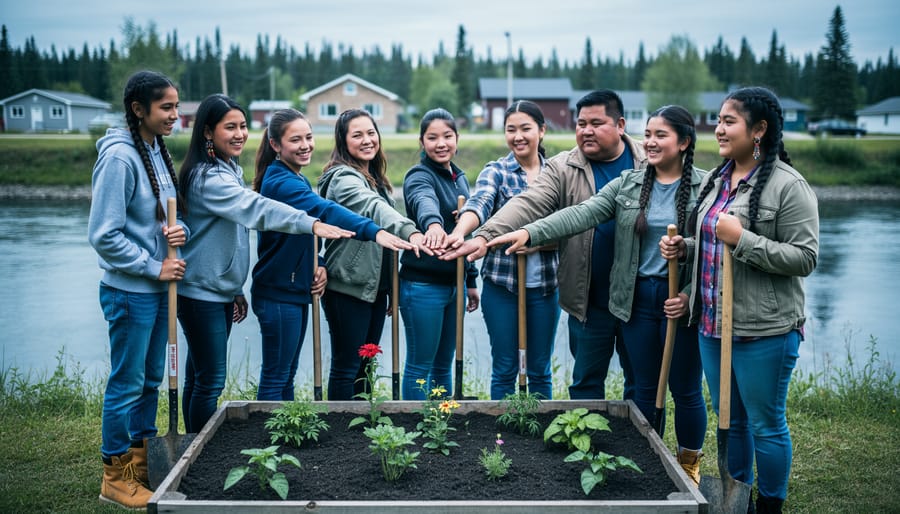
Youth involved in social change initiatives bring fresh perspectives, cultural fluency, and authentic community connections that drive meaningful impact across Canada. When organizations engage young people as genuine partners rather than passive beneficiaries, projects gain momentum, relevance, and sustainability that purely adult-led efforts often lack.
The evidence is clear. Programs rooted in youth leadership demonstrate higher retention rates, stronger community buy-in, and more innovative solutions to complex challenges. This holds especially true in Indigenous communities, where youth involvement bridges traditional knowledge systems with contemporary action, creating pathways that honor both Elders’ wisdom and young peoples’ lived realities.
Yet genuine youth involvement requires more than token representation at the table. It demands structural changes in how philanthropic organizations, NGOs, and community groups make decisions, allocate resources, and measure success. Too often, well-meaning initiatives fall into the trap of asking young people for input while maintaining adult-controlled frameworks that limit real influence.
Across Canada in 2026, a growing number of collaborative initiatives show what’s possible when youth hold authentic power. From Coast Salish youth leading watershed restoration projects in British Columbia to Inuit young leaders redesigning mental health supports in Nunavut, these success stories share common elements: trust from adult allies, access to resources, and decision-making authority that goes beyond advisory roles.
The framework for meaningful youth involvement isn’t complicated, but it does require organizations to rethink power dynamics, timeline expectations, and what constitutes expertise. Understanding these principles creates the foundation for partnerships that transform both young people and the communities they serve.
Why Youth Involvement Matters Now More Than Ever
Canada stands at a demographic turning point that makes youth engagement not just valuable, but essential. Nearly 30 percent of the Indigenous population is under 25, compared to 18 percent of the non-Indigenous population. This youth bulge represents tremendous potential energy for community transformation, but only if these young voices gain real influence in shaping social programs and policy.
The challenges facing communities in 2026 demand the perspectives that youth involved in social change naturally bring. Climate disruption hits hardest in Northern and Indigenous communities where young people see the impacts daily. Mental health crises, housing shortages, and the ongoing work of reconciliation all require solutions that will serve communities for decades. Those who will live longest with these outcomes deserve meaningful roles in designing them.
Traditional top-down approaches to social challenges have proven insufficient. Youth experience issues like poverty, systemic barriers, and environmental degradation differently than previous generations did. A 16-year-old navigating the child welfare system understands its gaps more intimately than any policy paper can capture. A young person growing up between cultures carries insights about identity and belonging that no consultant can manufacture.
The timing matters for another reason: youth involved today become the community leaders, elected officials, and philanthropic decision-makers of tomorrow. Early engagement builds capacity and trust that strengthens civil society for generations. Indigenous youth reconnecting with traditional knowledge while pursuing higher education create bridges between ancestral wisdom and contemporary action. When young people participate authentically now, they transform not only current initiatives but the entire trajectory of community development across Canada.
The Unique Strengths Youth Bring to Social Change
Young people bring a distinct set of capabilities to social change work that complement rather than replace adult experience. Understanding these strengths helps organizations design initiatives that leverage what youth do best while building authentic partnerships.
Digital Fluency as a Force Multiplier
Youth navigate digital platforms with intuitive ease, creating campaigns that reach audiences traditional methods miss. Indigenous youth, for example, use TikTok and Instagram to share language lessons, revitalize cultural practices, and mobilize supporters for land protection, all with production values that rival professional media. This digital competence isn’t just about posting content. Young changemakers understand algorithms, build online communities, and turn viral moments into sustained movements. They know which platforms their peers trust and how to craft messages that resonate across cultural divides.
Core Strengths That Drive Impact
The qualities youth bring to social change work include:
- Digital innovation that transforms how movements spread and communities organize
- Peer influence that reaches audiences adults cannot access authentically
- Cultural authenticity that bridges traditional and contemporary worldviews
- Fearless advocacy unencumbered by professional caution or institutional politics
- Fresh perspectives that question assumptions and spot overlooked solutions
- Sustained energy and optimism that fuel long-term commitment to difficult work
Bridging Worlds Through Lived Experience
Young people today grow up navigating multiple identities and communities simultaneously. Indigenous youth move between traditional teachings and urban realities, between Elders’ wisdom and TikTok trends. This lived experience of bridging worlds makes them natural translators who can frame issues in ways that resonate across generations and cultures. They spot connections adults miss because they’re not stuck in disciplinary silos or bound by how things have always been done.
Youth also bring a willingness to experiment and fail publicly, treating setbacks as learning rather than career threats. This fearlessness produces breakthrough approaches precisely because young changemakers aren’t protecting established reputations or organizational relationships.
Models of Meaningful Youth Involvement
Youth-Led Initiatives
Youth-led initiatives represent the most direct form of youth involvement in social change, where young people control the vision, strategy, and execution. These programs demonstrate that when trusted with real responsibility, youth involved in design and leadership create solutions that adults might never imagine.
In northern Ontario, the Nokiiwin Tribal Council Youth Leadership Program exemplifies this approach. Young members identify community needs, develop project proposals, secure funding, and implement initiatives entirely on their terms. Recent projects include a traditional medicine garden managed by youth and a peer-led mental health support network. Adults serve as advisors only when asked, ensuring young leaders maintain ownership.
Similarly, the Vancouver-based Youth Climate Corps shows how non-Indigenous youth-led organizations can make substantial environmental impact. Members aged 15 to 24 design urban greening projects, lead community workshops on climate adaptation, and advocate for policy changes, all with minimal adult intervention. Their success stems from applying the 7 C’s model which emphasizes competence, confidence, and connection in youth leadership development.
These initiatives share common elements: genuine decision-making power, access to resources without excessive oversight, and space to learn from mistakes. The results consistently outperform adult-designed programs in engagement, innovation, and sustained impact.
Youth-Adult Partnerships
The most effective social change happens when adults stop treating youth as beneficiaries and start treating them as colleagues. Youth-adult partnerships flip the traditional power dynamic by giving young people genuine authority over budgets, programming decisions and organizational direction, not just advisory seats where their input gets filtered through adult gatekeepers.
In these collaborative models, youth and adults serve together on boards, co-design initiatives from the ground up and share accountability for outcomes. An Indigenous-led environmental organization in British Columbia, for instance, pairs Elders with youth coordinators who jointly determine which restoration projects receive funding and how traditional knowledge integrates with contemporary conservation science. The youth bring current data skills and peer networks; the adults contribute institutional memory and relationship capital. Neither group can succeed alone.
The key difference from tokenism is that sharing power with youth requires adults to relinquish control, not just create participation opportunities. That means letting a 17-year-old co-chair a hiring committee, trusting youth to manage real money and accepting that their priorities might challenge long-standing organizational assumptions. It also demands structural supports: scheduling meetings around school commitments, providing transportation, offering stipends rather than expecting volunteer labour and building in mentorship without paternalism.
When executed well, these partnerships produce stronger outcomes precisely because they merge complementary strengths, the innovative energy youth bring with the strategic experience adults offer.
Success Stories: Youth Involved in Canadian Social Change
Indigenous Youth Reclaiming Culture and Community
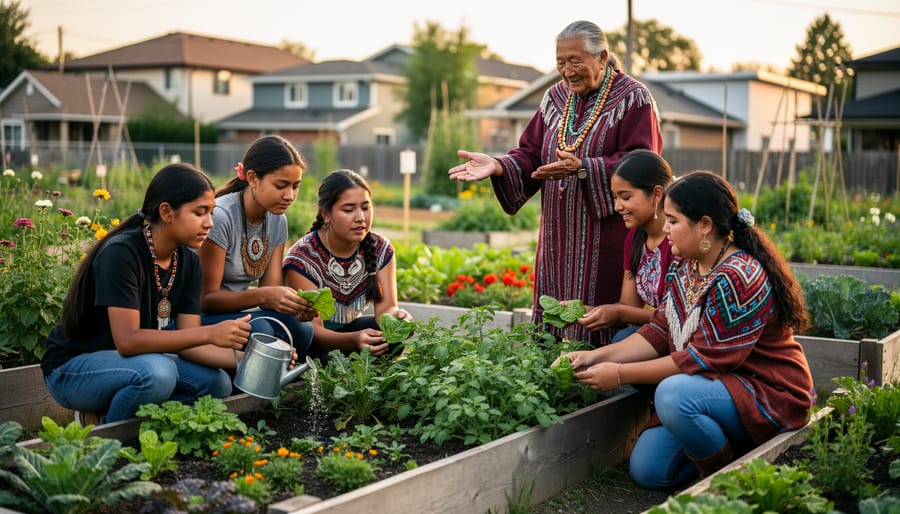
Across Canada, Indigenous youth are leading powerful movements that reconnect their communities with ancestral knowledge while addressing contemporary challenges. These young leaders are not waiting for permission, they are reclaiming languages, revitalizing ceremonies, and stewriding traditional territories with a confidence rooted in both cultural identity and modern innovation.
In northern Manitoba, Cree youth have established language immersion camps where Elders and teenagers collaborate to document oral histories and teach traditional dialects to younger children. These initiatives are reversing decades of language erosion caused by residential schools. In British Columbia, Coast Salish youth are restoring salmon habitats while learning traditional ecological knowledge from their grandparents, creating lasting community change that strengthens both environmental health and intergenerational bonds.
Indigenous youth are also addressing wellness gaps through culturally grounded approaches. In Saskatchewan, a youth-led mental health collective combines talking circles with peer support networks, creating safe spaces where young people can heal from intergenerational trauma while building resilience. In the Northwest Territories, Dene youth have launched land-based healing programs that take struggling community members onto traditional territories, where connection to the land becomes medicine.
These initiatives succeed because they are designed by the youth who understand their communities’ needs. They blend cultural traditions with contemporary tools, using social media to teach language, podcasts to share Elder wisdom, and digital mapping to protect sacred sites. The result is a generation of Indigenous youth involved in reclaiming their heritage while building stronger, healthier communities for the future.
Cross-Community Collaboration

Canada’s most powerful youth-driven social change emerges when young people from different backgrounds unite around common goals. These cross-community collaborations demonstrate that shared challenges transcend cultural and geographic boundaries, creating unexpected alliances and innovative solutions.
In Vancouver, the Youth Climate Alliance brings together Indigenous, newcomer, and settler youth to address environmental degradation through multiple cultural lenses. Indigenous participants share traditional ecological knowledge about forest stewardship, while recent immigrants contribute perspectives on climate adaptation from their home countries. This cross-pollination of ideas has produced watershed restoration projects that honour Coast Salish protocols while incorporating green infrastructure techniques from Southeast Asia.
The Reconciliation Youth Council, operating across Saskatchewan, pairs Indigenous and non-Indigenous teenagers in year-long partnerships focused on truth-telling and relationship-building. Rather than treating reconciliation as abstract concept, these youth involved tackle concrete projects: co-creating curricula that accurately represents residential school history, organizing community dialogues about treaty rights, and developing anti-racism campaigns for social media. The council’s structure ensures equal voice and rotating leadership between Indigenous and settler youth.
Toronto’s Food Justice Collective demonstrates how youth involvement addresses poverty through innovative food security models. The collective includes youth from low-income neighborhoods, suburban communities, and rural Indigenous reserves. Together, they’ve established community gardens that donate produce to food banks, negotiated partnerships with grocery chains to reduce waste, and advocated successfully for school breakfast programs in underserved areas.
These collaborations succeed because they’re built on genuine relationship-building, not performative diversity. Youth involved invest time understanding each other’s lived experiences before launching into action, creating trust that sustains their work through challenges.
How Organizations Can Support Youth Involvement Effectively
Supporting meaningful youth participation requires more than good intentions, it demands structural change. Organizations that successfully engage young people don’t simply create a youth advisory committee and call it done. They redesign their decision-making processes, resource allocation, and organizational culture to genuinely share power.
Start by paying youth for their time and expertise. Many organizations expect young people to volunteer while compensating adult staff for the same work. This approach excludes youth who need income and devalues their contributions. Competitive stipends, honoraria, or employment send a clear message that youth insights matter as much as anyone else’s.
Create flexible participation structures that accommodate school schedules, part-time jobs, and transportation challenges. Evening and weekend meetings, virtual participation options, and transportation support remove common barriers. One Ontario environmental organization shifted all youth meetings to 7 p.m. starts and saw participation triple within months.
Build authentic decision-making authority into youth roles from the beginning. Young leaders should help set budgets, hire staff, design programs, and evaluate outcomes, not simply advise while adults retain all final say. The Assembly of First Nations Youth Council demonstrates this model by giving youth direct voting power on national policy positions.
Invest in mentorship and skill development without being paternalistic. Young people bring valuable perspectives and capabilities, but many benefit from support developing grant writing, public speaking, or project management skills. Pair skills training with opportunities to immediately apply new abilities in real initiatives, not hypothetical exercises.
Commit to multi-year partnerships rather than one-off projects. Meaningful change takes time, and youth engagement deepens when relationships extend beyond a single event or program cycle. Multi-year commitments also allow young people to progress from participants to peer mentors, creating sustainable leadership pipelines.
Finally, accept feedback and change your practices when youth identify problems. Organizations that defend existing structures rather than adapting to youth input quickly lose credibility and participation. The willingness to evolve based on what young people tell you matters more than starting with perfect systems.
Overcoming Barriers to Youth Participation
Real barriers prevent talented young people from becoming involved in social change work. Transportation tops the list, youth in rural and remote communities can’t attend evening meetings or weekend events without reliable rides. Scheduling conflicts with school, part-time jobs, and family responsibilities create another layer of difficulty. Many Indigenous youth face the additional challenge of balancing cultural responsibilities and community obligations with activist work.
Perhaps more damaging than logistics is tokenism. Organizations seeking “youth input” often invite one young person to sit on an adult board, then ignore their ideas or dismiss concerns as naive. This performative inclusion erodes trust quickly. Youth can sense when their presence serves to check a diversity box rather than shape real decisions.
Trust itself becomes a barrier when organizations lack track records of meaningful youth engagement. Young people, especially those from marginalized communities, won’t invest energy in initiatives that historically excluded them or appropriated their ideas without credit.
| Barrier | Solution |
|---|---|
| Transportation and logistics | Provide transit passes, arrange carpools, offer virtual participation options, schedule events around school calendars |
| Tokenism in decision-making | Create youth councils with real budget authority, implement youth co-chair models, mandate youth representation on all committees |
| Lack of trust | Start with small co-created projects, hire youth staff, compensate youth for their time, share power transparently |
| Skills and confidence gaps | Offer training in facilitation and advocacy, pair youth with mentors, celebrate learning alongside outcomes |
Successful programs address barriers systematically. They pay youth honorariums for their time, recognizing that unpaid “volunteer opportunities” exclude those who need income. They build flexibility into timelines, understanding that youth availability fluctuates with academic demands. Most importantly, they design initiatives where youth hold genuine authority over community impact decisions from the start, not just advisory roles adults can override.
The evidence is clear: youth involved in social change aren’t preparing to lead tomorrow, they’re leading today. Across Canada, young people are revitalizing languages, designing climate solutions, bridging cultural divides, and rebuilding community trust in ways that established institutions have struggled to achieve for decades.
For organizations working in the non-profit and philanthropic sectors, the question isn’t whether to engage youth, but how quickly you can shift power and resources to support their leadership. The examples we’ve explored show that tokenistic youth advisory committees won’t cut it. Real impact comes from genuine partnerships where young people share decision-making authority, control budgets, and shape strategy from the ground up.
If you lead an NGO, foundation, or community organization, start by auditing your current youth engagement honestly. Are young people at your board table? Do they influence how funding gets allocated? Can they say no to your ideas? If the answers reveal gaps, that’s your roadmap.
Reach out to youth-led organizations already doing this work and ask how you can support them without taking over. Create paid positions and honoraria that respect young people’s time and expertise. Most importantly, be willing to get uncomfortable, because meaningful reconciliation and community wellness require adults to relinquish control and trust that youth involved in shaping decisions will chart a better course than we could alone.
The transformation is underway. Your role is to accelerate it.