
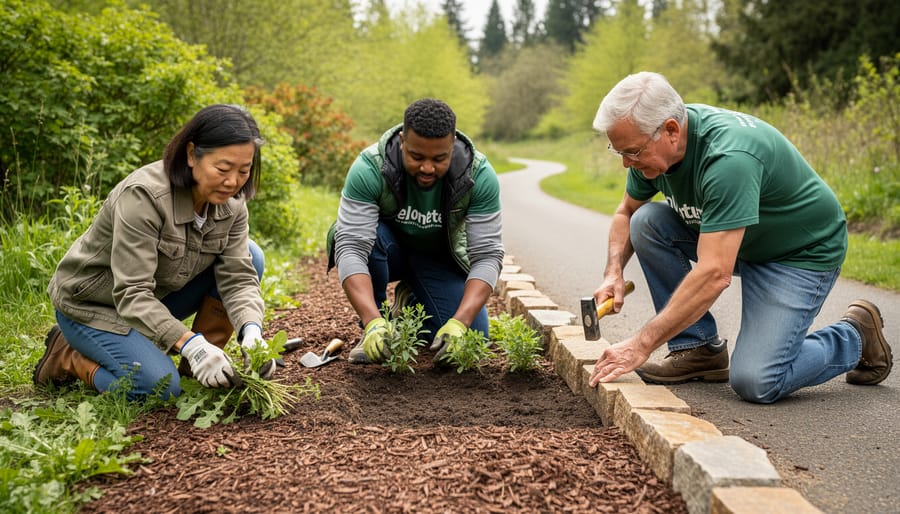
Vancouver, Washington offers dozens of hands-on volunteer opportunities spanning youth mentorship, environmental restoration, park stewardship, and water conservation programs that welcome individuals, families, and groups of all ages and abilities. Whether you can commit to a long-term mentoring relationship with a young person who has experienced trauma or prefer flexible, drop-in projects like trail maintenance and storm drain education, the city’s volunteer ecosystem provides accessible entry points for every schedule and skill level. Organizations like Great Life Mentoring, established in 2000 to serve children ages 9-16 in Clark County and Portland, work alongside the City of Vancouver’s volunteer programs to create meaningful pathways for community engagement.
The search for local volunteer work reflects a broader movement toward place-based service that strengthens neighborhood bonds while addressing real environmental and social needs. Vancouver’s programs stand out for their emphasis on inclusion, designing opportunities that accommodate varying physical abilities, time commitments, and areas of interest. From removing invasive plants in native habitat restoration sites through the Naturespaces program to installing educational storm drain medallions in the Burnt Bridge Creek Watershed, these roles let volunteers see the direct impact of their contributions. The following seven opportunities represent the diverse ways residents can give back in 2026, each offering distinct benefits and community connections.
Why Vancouver, WA Volunteer Programs Matter
Volunteer programs in Vancouver, Washington serve as vital connectors between community needs and civic participation. When residents invest time in local initiatives, whether mentoring youth through organizations like Great Life Mentoring or maintaining parks and natural spaces, they strengthen the social fabric that makes neighborhoods resilient. These contributions extend beyond immediate tasks like picking up litter or planting trees; they create networks of care that help vulnerable populations, preserve environmental resources for future generations, and build shared ownership of public spaces.
What sets Vancouver’s volunteer landscape apart is its intentional inclusivity. The City of Vancouver designs programs that accommodate individuals, families, groups, businesses, and people of all abilities, recognizing that everyone has something valuable to contribute. A family can spend Saturday mornings removing invasive plants through Naturespaces, while a local business team might coordinate a beach cleanup at the Water Resources Education Center. This flexibility ensures that participation fits diverse schedules, physical capabilities, and interests.
These efforts gain power through collaboration between city departments, nonprofit organizations, and community groups. When Urban Forestry workshops teach tree identification skills while Adopt-A-Park teams maintain green spaces, and mentoring programs address childhood trauma, the combined effect creates healthier, more connected communities. Each volunteer hour contributes to broader societal wellbeing, improving environmental quality, supporting at-risk youth, and fostering the relationships that make Vancouver a place where people look out for one another.
1. Great Life Mentoring, Support Children Through One-on-One Mentorship

Great Life Mentoring has been connecting caring adults with young people in Clark County, WA and Portland, OR since 2000. The organization serves children ages 9-16 who have experienced trauma or face difficult circumstances in life, providing them with consistent, youth-centered support through one-on-one mentorship relationships.
As a mentor, you commit to spending regular time with a young person, offering something many have never known: stability, genuine attentiveness, and friendship. These aren’t complex therapeutic interventions. They’re simple acts of showing up consistently, listening without judgment, and helping a child see possibilities beyond their current struggles.
The impact extends beyond individual children. When a young person gains confidence and learns to trust again through mentorship, they bring that resilience back to their families, schools, and neighborhoods. Mentors often describe the experience as transformative for themselves as well, gaining perspective and connection that enriches their own lives.
This opportunity suits volunteers who can make a sustained commitment rather than drop-in participation. You’ll receive training and ongoing support as you build a relationship that gives a child in Southwest Washington the stable presence they need during formative years.
2. Adopt-A-Park, Keep Vancouver’s Parks Clean and Welcoming
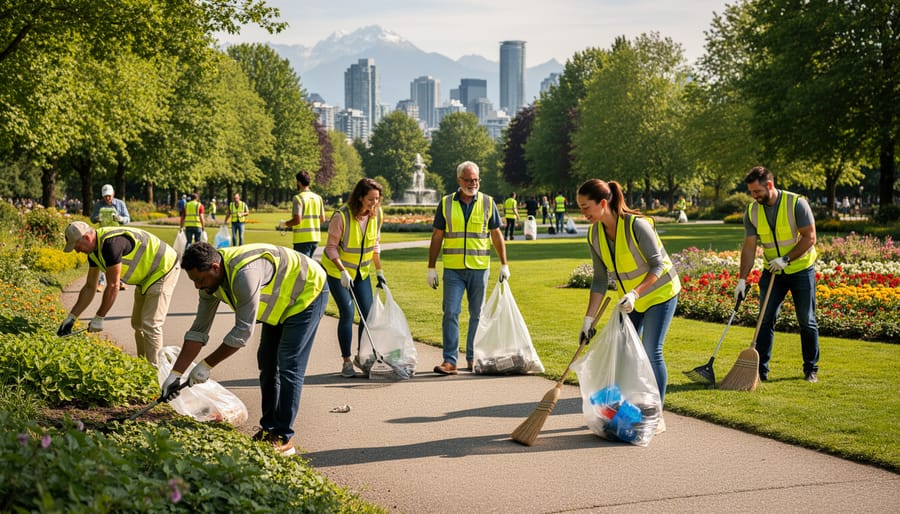
Vancouver’s Adopt-A-Park program transforms park maintenance into community connection. Volunteers tackle hands-on work that keeps neighborhood green spaces welcoming: picking up litter, wiping down playground equipment, pulling invasive weeds, and completing seasonal upkeep projects that might otherwise wait months for city crews to address.
The program’s flexibility sets it apart. Whether you’re an individual looking for a Saturday morning routine, a family teaching kids about civic responsibility, a corporate team seeking meaningful volunteer hours, or a neighborhood group claiming stewardship of your local park, Adopt-A-Park accommodates your situation. The City of Vancouver designed these opportunities for people of all ages and physical abilities, ensuring that everyone can contribute at their own pace and capacity.
This model of community ownership echoes principles found in Indigenous stewardship where care for shared spaces becomes a collective responsibility rather than a top-down service. Regular volunteers report a deeper sense of belonging to their neighborhoods. You notice the park’s rhythms, which corners accumulate debris, when the blackberries encroach, how children use different play areas through the seasons.
Parks become extensions of your community when you invest sweat equity in their upkeep. That bench you cleaned becomes the one where you nod to fellow walkers. The path you cleared invites more families to explore.
3. Naturespaces, Restore Native Habitat and Green Spaces
Naturespaces provides volunteers with hands-on opportunities to restore Vancouver, Washington’s native ecosystems and green spaces. This program focuses on removing invasive plant species, replanting native vegetation, and rehabilitating natural areas that support local wildlife and clean water systems.
Volunteers learn to identify native Pacific Northwest plants while actively improving habitat corridors throughout the city. The work directly protects salmon-bearing streams, provides refuge for pollinators and songbirds, and strengthens the ecological resilience of urban green spaces. Each restoration project contributes to long-term environmental health that benefits the entire Vancouver community.
The program welcomes people of all ages and abilities, making ecological stewardship accessible to families, individuals, and groups. Tasks range from pulling weeds to mulching newly planted native shrubs, with experienced leaders providing guidance and education throughout each work party.
This restoration approach honors Indigenous practices of reciprocal care for the land. By centering native species that have sustained this region for thousands of years, volunteers participate in healing relationships between people and place. The knowledge gained through Naturespaces extends beyond volunteer hours, empowering participants to make environmentally conscious choices in their own yards and neighborhoods.
4. Urban Forestry, Plant and Care for Vancouver’s Tree Canopy
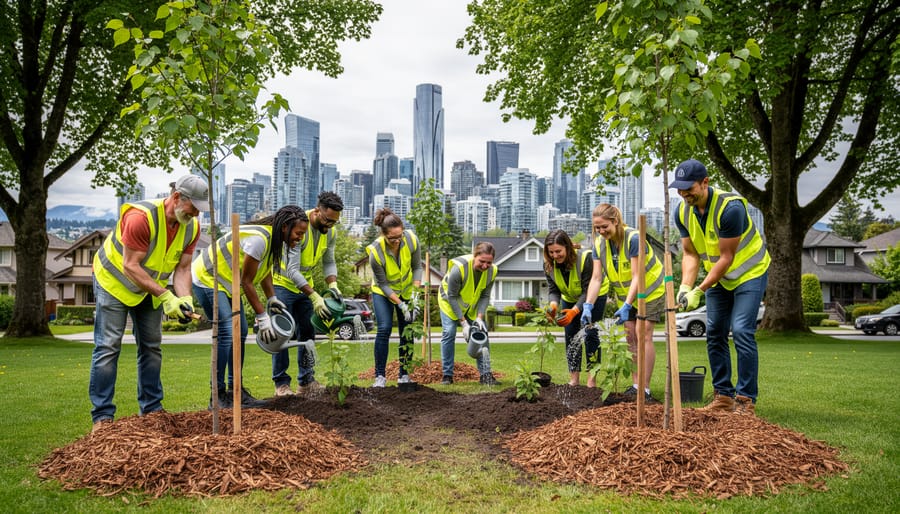
Vancouver’s Urban Forestry program connects volunteers with hands-on opportunities to expand and maintain the city’s tree canopy through tree plantings, educational tree tours, pruning workshops, and tree identification workshops. These activities transform neighborhoods while building practical knowledge volunteers can apply in their own yards and communities.
Tree plantings create immediate visible impact as volunteers help establish young trees in parks, streets, and public spaces throughout Vancouver. The work strengthens the urban forest that provides shade, reduces summer heat, improves air quality, and creates habitat for birds and beneficial insects. Each tree planted represents a decades-long investment in community health and climate resilience.
The educational workshops offer skills-based learning that extends beyond a single volunteer shift. Pruning workshops teach proper techniques to maintain tree health and structure, while identification sessions help volunteers recognize common species and understand their ecological roles. Tree tours combine walking through Vancouver neighborhoods with expert-led instruction about tree biology, urban forestry challenges, and the interconnections between green canopy and community wellbeing.
These programs welcome people of all ages and abilities, making tree stewardship accessible whether you have an afternoon or want ongoing involvement in environmental care. The combination of physical work and knowledge-building creates lasting connections between volunteers and the living landscape around them.
5. Water Resources Education Center, Protect Local Waterways
The Water Resources Education Center offers hands-on opportunities to protect Vancouver’s waterways and educate the community about watershed health. Volunteers can participate in beach cleanups along local shorelines, removing debris that threatens aquatic ecosystems and wildlife. The center also maintains backyard habitat demonstration gardens that showcase native plants and sustainable landscaping practices suited to the Pacific Northwest climate.
A particularly visible volunteer activity involves installing storm drain medallions throughout the Burnt Bridge Creek Watershed. These markers remind residents that storm drains flow directly into local creeks and rivers, encouraging pollution prevention at the source. This work raises awareness about how everyday actions affect water quality downstream.
In the Pacific Northwest, where rivers, streams, and wetlands define the landscape, watershed protection holds special significance. Clean waterways support salmon populations that have cultural and ecological importance, provide drinking water for communities, and sustain diverse habitats. Volunteer efforts at the Water Resources Education Center translate directly into healthier streams and a more informed public.
These opportunities suit anyone interested in environmental stewardship, from families teaching children about ecosystems to individuals seeking outdoor service work. The center’s educational focus means volunteers gain knowledge about local ecology while contributing to tangible conservation outcomes in their own watershed.
6. Family and Group Volunteer Projects, Engage Together
Vancouver’s volunteer programs recognize that service becomes more meaningful when shared. The City of Vancouver’s initiatives, from Adopt-A-Park maintenance to Water Resources Education Center projects, are structured to welcome groups of any size and composition, making collective action straightforward for families wanting to volunteer together, corporate teams seeking hands-on community engagement, or friend groups looking to contribute.
Intergenerational volunteering creates unique value. When children work alongside parents on habitat restoration through Naturespaces, or when grandparents join grandchildren at Urban Forestry tree plantings, the shared experience builds family bonds while modeling civic responsibility. Younger participants learn environmental stewardship firsthand, while older volunteers bring perspective and continuity to the work.
Team-based service strengthens workplace culture differently than traditional team-building exercises. Business groups tackling beach cleanups or installing storm drain medallions in the Burnt Bridge Creek Watershed develop collaboration skills while addressing real community needs. These projects accommodate varying physical abilities and time constraints, allowing organizations to customize their involvement.
The flexibility extends beyond environmental programs. Whether a scout troop wants to adopt a park section, a church group seeks a one-time service day, or a company plans quarterly volunteer events, Vancouver’s programs adapt to different schedules and group dynamics without requiring extensive coordination or specialized skills.
7. Accessible Opportunities, Volunteering for All Abilities
Vancouver, WA’s commitment to inclusive volunteering ensures that everyone can contribute meaningfully to their community, regardless of physical, cognitive, or sensory abilities. The City of Vancouver explicitly designs its programs, from Adopt-A-Park to Urban Forestry, to accommodate people of all abilities, recognizing that diverse participation strengthens both the volunteer experience and the community impact.
This inclusive approach means adaptive roles are built into program design rather than offered as afterthoughts. Someone who uses a mobility device might focus on educational outreach at the Water Resources Education Center, while another volunteer handles trail maintenance at a Naturespaces site. Great Life Mentoring matches mentors with youth based on compatibility and shared interests, not physical capability. Tree identification workshops welcome learners of all backgrounds, while beach cleanups at Burnt Bridge Creek can accommodate varying levels of physical involvement.
Universal participation enriches the volunteer landscape in ways that benefit everyone. When programs welcome individuals with disabilities alongside families, youth, seniors, and corporate groups, they create spaces where different perspectives and problem-solving approaches flourish. A volunteer who navigates the world differently brings unique insights to accessibility challenges in parks, watershed education, or mentorship connections.
This philosophy reflects a broader understanding: true community strength emerges when everyone has the opportunity to serve, not just receive services. Inclusive volunteer design removes barriers, ensuring that the act of giving back remains accessible to all Vancouver residents.
How to Choose the Right Volunteer Opportunity for You
Selecting a volunteer role that aligns with your circumstances and passions makes your contribution more sustainable and fulfilling. Start by honestly assessing your available time: mentoring through Great Life Mentoring requires consistent weekly meetings over months, while a Saturday beach cleanup with the Water Resources Education Center fits a busier schedule. Consider these factors:
- Time commitment, weekly, monthly, or project-based involvement
- Physical requirements, outdoor restoration work versus administrative support
- Skills alignment, hands-on labor, teaching, or relationship-building strengths
- Personal interests, environmental stewardship, youth development, or neighborhood beautification
- Group versus individual preference, family projects or solo mentorship roles
Families often thrive in Adopt-A-Park or Urban Forestry tree plantings where everyone contributes together. If you’re drawn to ecological restoration and community change Naturespaces connects those values with tangible habitat work. Match your choice to what genuinely energizes you rather than what sounds impressive. Talk with current volunteers when possible to understand the real rhythm and expectations of each program. A role that fits your life naturally will keep you engaged for years, deepening your impact and connection to Vancouver’s community.
Frequently Asked Questions About Volunteering in Vancouver, WA
What are the age requirements for volunteering in Vancouver, WA?
Age requirements vary by program. Great Life Mentoring serves children ages 9-16, while City of Vancouver programs welcome volunteers of all ages, including families with children. Many opportunities are designed to accommodate everyone from young students to retirees.
Can families volunteer together in Vancouver, Washington?
Yes, many Vancouver, WA programs specifically accommodate families. City of Vancouver opportunities like Adopt-A-Park, Naturespaces, and Urban Forestry projects welcome family groups, making community service accessible for parents and children to participate side by side.
How much time do I need to commit as a volunteer?
Time commitments range from single-day projects to ongoing relationships. Programs like beach cleanups or tree plantings may require just a few hours, while mentoring through Great Life Mentoring involves regular time spent building relationships with young people over an extended period.
Are Vancouver volunteer opportunities accessible for people with disabilities?
City of Vancouver volunteer programs are designed to accommodate people of all abilities. Whether you’re interested in park maintenance, habitat restoration, or environmental education, staff can often adapt tasks to match different physical capabilities and accessibility needs.
Getting started with volunteer work in Vancouver, WA typically involves identifying which cause resonates with you and reaching out to the organization directly. Most programs provide orientation or training to prepare volunteers for their roles, whether that’s learning proper tree pruning techniques, understanding watershed protection, or preparing for meaningful mentorship relationships. You don’t need prior experience for most opportunities, just genuine interest and willingness to contribute your time to strengthening the community.
Vancouver, WA’s volunteer landscape demonstrates that meaningful community service is within everyone’s reach. Whether you’re drawn to mentoring a young person through Great Life Mentoring, restoring native habitats through Naturespaces, or protecting local waterways at the Water Resources Education Center, each opportunity offers a distinct way to strengthen the bonds that hold communities together.
The programs highlighted here reflect a commitment to inclusive service that welcomes people of all ages, abilities, and backgrounds. From families seeking shared experiences to individuals looking for flexible weekend projects, Vancouver’s volunteer infrastructure is designed to accommodate your circumstances while addressing genuine local needs.
Taking that first step requires only a decision to show up. The organizations serving Clark County have created accessible pathways for new volunteers, recognizing that civic engagement strengthens when barriers fall away. Your contribution matters, not because any single act will solve every challenge, but because collective action builds the resilient, connected communities where everyone can thrive.