

Recognize that Indigenous communities across Canada are exploring innovative revenue models that align with cultural values while supporting self-determination. Revenue from regulated gaming, including bitcoin casino slots and other platforms, now presents opportunities for Indigenous-led philanthropy when structured through culturally responsive frameworks that prioritize community benefit and harm reduction.
Establish clear governance structures that center Indigenous leadership in decision-making processes for any philanthropic partnerships involving gaming revenue. This means ensuring Indigenous organizations maintain full autonomy over fund allocation, program design, and community impact measures rather than accepting passive recipient roles in traditional charitable models.
Implement comprehensive responsible gambling protocols that reflect Indigenous understandings of wellness and community health. These protocols must include culturally appropriate problem gambling prevention programs, revenue sharing agreements that transparently benefit entire communities, and mechanisms for continuous community consultation about the ethical dimensions of gaming partnerships.
Examine existing successful models where First Nations, Métis, and Inuit communities have created sustainable philanthropic funds through various economic ventures. The Meadow Lake Tribal Council’s NorSask Forest Products and the Membertou First Nation’s economic development initiatives demonstrate how Indigenous-controlled enterprises can generate substantial community investment while maintaining cultural integrity and environmental stewardship.
Consider the broader context of Indigenous economic reconciliation where communities seek pathways to financial sovereignty after generations of systemic exclusion from economic opportunities. Responsible gaming partnerships, when designed with genuine Indigenous partnership and oversight, can contribute to self-determined futures while addressing immediate funding gaps in education, healthcare, language revitalization, and youth programming that government funding chronically fails to meet.
The Growing Intersection of Online Gambling and Indigenous Self-Determination
Gaming Revenue as Economic Reconciliation
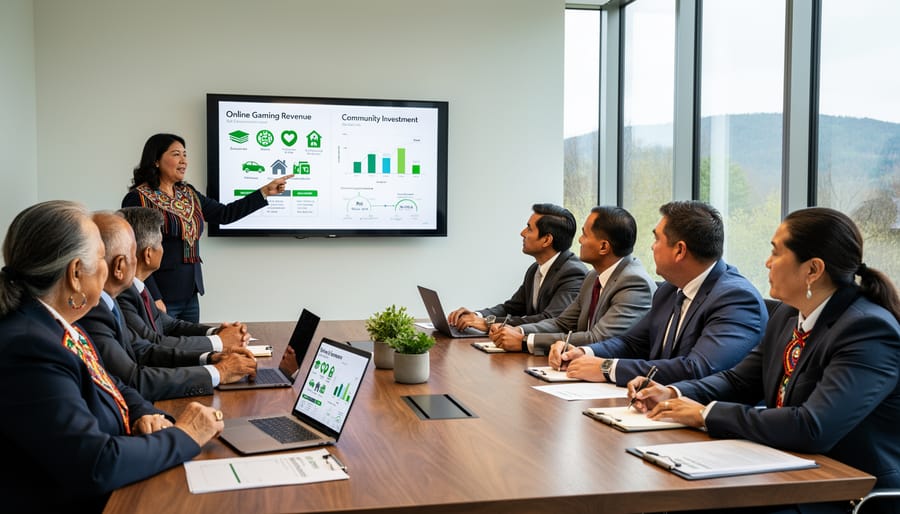
Gaming revenue partnerships between online platforms and Indigenous communities represent a meaningful pathway toward economic self-determination and cultural resilience. These collaborations extend beyond simple revenue sharing, creating frameworks where Indigenous nations exercise sovereignty over economic decisions while maintaining cultural integrity.
Several Canadian online gambling platforms have established innovative models where a percentage of gaming revenue directly supports Indigenous-led initiatives. These funds flow into language revitalization programs, youth education, elder care, and cultural centers that preserve traditional knowledge. Unlike conventional charity models, these partnerships acknowledge Indigenous communities as equal stakeholders with decision-making authority over how funds are allocated and distributed.
The Kwanlin Dün First Nation in Yukon exemplifies this approach, having developed partnerships that generate sustainable revenue streams supporting community priorities determined by their own governance structures. This model reflects principles outlined in the federal government’s Economic Reconciliation framework, which emphasizes Indigenous-led economic development and shared prosperity. Research from the National Indigenous Economic Development Board indicates that revenue-sharing partnerships in gaming and other sectors have become increasingly important tools for building economic capacity in First Nations communities, particularly when structured to respect Indigenous governance and self-determination. This economic foundation enables communities to reduce dependency on government funding while building capacity for long-term planning and cultural programming.
These arrangements align with broader conversations about philanthropy and decolonization recognizing that true reconciliation requires restructuring economic relationships. When online gambling platforms commit to transparent, accountable partnerships that respect Indigenous governance, gaming revenue becomes more than profit redistribution. It transforms into a tool for self-determination, allowing communities to invest in their futures according to their own values and priorities while maintaining cultural connections that strengthen identity and belonging across generations.
Indigenous-Led Gaming Initiatives in Canada
Across Canada, Indigenous nations are increasingly taking leadership roles in gaming operations, transforming these ventures into powerful tools for community development and self-determination. These initiatives demonstrate how gaming revenue can fund essential services, preserve cultural heritage, and create sustainable economic opportunities.
The Saskatchewan Indian Gaming Authority stands as a pioneering example, operating several casinos across the province in partnership with the provincial government. Since its establishment in 1995, this authority has returned millions of dollars to First Nations communities, funding education programs, health services, infrastructure improvements, and cultural initiatives. The revenue-sharing model has enabled participating communities to reduce dependency on federal transfers while maintaining control over their development priorities.
In British Columbia, the First Nations Gaming Commission represents another innovative approach. Several nations have partnered with gaming operators to establish facilities that prioritize community benefit. These partnerships typically include employment preferences for Indigenous peoples, cultural competency training for staff, and dedicated funding streams for community programs. The Musqueam Indian Band’s gaming partnerships, for instance, have supported housing initiatives, language revitalization programs, and youth employment opportunities.
More recently, Indigenous nations are exploring partnerships with online gaming platforms, recognizing the digital economy’s potential. These ventures maintain the same commitment to responsible gaming while expanding revenue possibilities. The Kahnawake Gaming Commission, established by the Mohawk Council of Kahnawake in Quebec, has become an internationally recognized gaming regulator, demonstrating Indigenous capacity for sophisticated governance in the digital gaming sector.
These success stories share common elements: Indigenous control over decision-making, transparent revenue distribution, strong regulatory frameworks, and deep commitment to responsible gaming practices that protect community wellbeing.
Responsible Gambling Through an Indigenous Lens
Traditional Teachings and Community Wellness
Indigenous communities across Canada have long held teachings that emphasize balance, collective wellbeing, and respect for all relations. These foundational principles offer powerful frameworks for addressing gambling-related harm and promoting community wellness. Many Indigenous traditions speak to the importance of moderation, the interconnectedness of individual and community health, and the responsibility each person holds toward future generations.
Elder knowledge keepers often describe wellness through a holistic lens, encompassing physical, mental, emotional, and spiritual dimensions. This comprehensive understanding recognizes that gambling harm extends beyond financial loss, affecting families, relationships, and cultural participation. When one community member struggles, the entire community feels the impact, a reality that traditional teachings have always acknowledged.
Several Indigenous-led organizations have successfully integrated these perspectives into prevention and support programs. The Thunderbird Partnership Foundation, for example, has developed culturally grounded resources that connect traditional wellness concepts with contemporary challenges, including problem gambling. Their 2019 report “Honouring Our Strengths: Indigenous Culture as Intervention in Addictions Treatment” documents positive outcomes from culturally informed interventions, showing improved engagement and sustained recovery when programs incorporate traditional practices and knowledge systems. This evidence-based approach demonstrates how ancient wisdom remains profoundly relevant in addressing modern issues.
Community-based initiatives often incorporate ceremonies, sharing circles, and land-based activities as healing modalities. These practices reinforce cultural identity while providing alternatives to gambling activities. Youth programs rooted in traditional teachings help younger generations understand their responsibilities to themselves, their families, and their communities.
By centering Indigenous knowledge systems in gambling harm prevention, communities create responses that resonate culturally and prove more effective than imported models. This approach honors the wisdom of ancestors while addressing present-day challenges, demonstrating that traditional teachings offer practical guidance for navigating complex contemporary issues like responsible gambling regulation and community wellness.
Traditional Indigenous approaches to community wellness and balance inform culturally appropriate responsible gambling practices.
Cultural Safety in Gambling Support Services
Effective gambling support services for Indigenous communities must be grounded in cultural safety, an approach that recognizes the unique historical, social, and spiritual contexts shaping Indigenous relationships with gambling. Unlike mainstream programs that often apply one-size-fits-all solutions, culturally responsive support systems honor traditional healing practices, incorporate Elders’ wisdom, and acknowledge the intergenerational impacts of colonization that can influence gambling behaviors.
Key principles that define culturally safe gambling support include:
- Indigenous leadership and staffing by counselors who understand cultural nuances
- Incorporation of traditional healing practices such as land-based activities and ceremonies
- Active Elder involvement in program design and delivery
- Trauma-informed approaches that address colonial impacts and intergenerational trauma
- Holistic wellness connections that link gambling support to broader health and cultural identity
- Community-driven program design that reflects local values and knowledge systems
Indigenous-led programs demonstrate remarkable success by centering community values and knowledge systems. The Native Addictions Council of Manitoba integrates land-based healing activities and talking circles into their gambling support services, creating spaces where community members feel understood and respected. These programs draw on cultural safety frameworks that position Indigenous knowledge as foundational rather than supplementary. Similarly, the First Nations Health Authority in British Columbia has developed training protocols that prepare support workers in trauma-informed care specific to Indigenous experiences, ensuring that interventions address root causes rather than symptoms alone.
These programs recognize that gambling challenges cannot be separated from broader community wellness. By involving family members, respecting ceremonial practices, and employing Indigenous counselors, these initiatives achieve higher engagement rates and more sustainable outcomes. The Thunderbird Partnership Foundation’s approach to problem gambling prevention exemplifies this holistic model, connecting individuals to cultural identity strengthening programs alongside practical support.
For philanthropic organizations and policy makers, these success stories underscore the necessity of supporting Indigenous communities in designing and delivering their own solutions. When funding flows directly to Indigenous-led organizations with minimal bureaucratic barriers, communities can create culturally grounded support systems that truly serve their members’ needs while maintaining dignity and self-determination.
Philanthropic Models: Redirecting Gaming Profits to Community Impact
Revenue Sharing Agreements That Work
Across Canada, innovative revenue sharing models are demonstrating how online gambling operations can support Indigenous communities while respecting self-determination and cultural values. These partnerships move beyond traditional charitable donations to create sustainable, long-term funding arrangements that empower communities to address their own priorities.
The Saskatchewan Indian Gaming Authority represents a groundbreaking model where First Nations communities directly participate in gaming revenue distribution. Since its establishment in 1995, this approach has generated over $1.4 billion for education, healthcare, infrastructure, and cultural preservation programs across 74 First Nations. The SIGA model allocates 50% of net gaming income to the First Nations Trust, with the remaining 50% split between the provincial government and the Community Development Corporations. Community leaders emphasize that success stems from Indigenous governance structures controlling fund allocation, ensuring money flows where communities identify the greatest need.
In British Columbia, some online gambling operators have established formal agreements with specific Nations, providing percentage-based revenue sharing tied to player activity within territorial boundaries. The Tsleil-Waututh Nation’s partnership, formalized in 2021, directs a percentage of regional gaming revenue toward youth programming, language revitalization, and environmental stewardship initiatives. While the Nation has not disclosed exact figures, similar BC First Nation gaming agreements typically allocate 3-7% of net gaming revenue to participating communities. Significantly, these agreements recognize Indigenous jurisdiction and create accountability mechanisms ensuring transparent fund management.
Effective partnerships share common characteristics: Indigenous communities maintain decision-making authority, agreements include long-term commitments rather than short-term grants, and regular consultation processes adapt arrangements as community needs evolve. When structured thoughtfully, these models provide predictable funding streams that enable strategic planning and community-driven development. As one Métis leader noted, successful partnerships treat Indigenous communities as equal partners with inherent rights, not passive recipients of corporate goodwill, transforming how philanthropy and commerce intersect in meaningful, respectful ways.
From Profit to Purpose: Funding Priority Areas
When Indigenous communities generate revenue through responsible online gambling partnerships, these funds become powerful catalysts for community-determined priorities. Rather than external organizations dictating needs, communities exercise sovereignty in directing resources toward initiatives that reflect their values and aspirations.
Education consistently emerges as a top priority, with funding supporting culturally relevant curriculum development, scholarship programs, and learning centers that bridge traditional knowledge with contemporary academic achievement. Healthcare investments address both immediate needs and long-term wellness, establishing mental health services, addiction support programs, and facilities that integrate traditional healing practices with modern medical care.
Language revitalization receives critical support, as communities recognize that preserving Indigenous languages safeguards cultural identity for future generations. Funds enable elder-youth language programs, digital archiving projects, and immersion initiatives that breathe new life into languages once threatened with extinction.
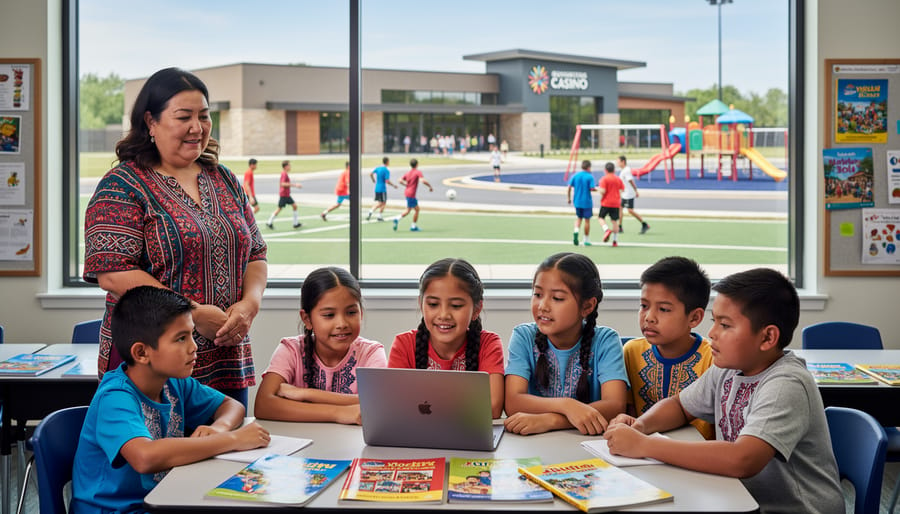
Indigenous youth programs particularly benefit from gambling-generated revenue, creating mentorship opportunities, cultural camps, sports and recreation facilities, and leadership development initiatives. These investments recognize youth as knowledge keepers and community leaders in training.
Infrastructure improvements funded through these partnerships range from community centers and housing developments to digital connectivity projects that reduce isolation and expand economic opportunities. Each allocation decision reflects community consultations, ensuring that gambling revenue truly serves as a tool for self-determination rather than simply profit redistribution. This approach transforms commercial activity into community empowerment, demonstrating how responsible partnerships can honor Indigenous priorities while fostering sustainable development.
Collaborative Initiatives Between Operators and Communities
Several gaming operators and Indigenous communities across Canada have moved beyond transactional relationships to develop meaningful reciprocal partnerships that address shared priorities. The Ontario First Nations Gaming Revenue Sharing Agreement exemplifies this approach, where revenues support not only infrastructure projects but also collaborative youth programs that combine traditional teachings with digital literacy education. In British Columbia, gaming operators have partnered with Indigenous organizations to create culturally-informed responsible gambling programs, co-designed by Elders and community health workers. These initiatives employ Indigenous counselors and incorporate traditional healing practices alongside conventional support services. Manitoba has seen gaming companies work directly with Indigenous social enterprises, providing mentorship and business development support that extends far beyond funding. These partnerships demonstrate how the gaming sector can contribute to community capacity-building while respecting Indigenous self-determination and cultural protocols, creating lasting positive impacts that reflect genuine collaboration rather than top-down charity.
Regulatory Framework and Ethical Considerations
Balancing Economic Opportunity with Community Protection
Indigenous communities across Canada face a delicate balancing act when considering partnerships with online gambling operators. While these arrangements can generate substantial revenue for essential programs including education, healthcare, and cultural preservation, leaders must carefully weigh potential social costs against financial benefits.
Many communities have developed sophisticated frameworks to navigate this complexity. The Kahnawake Gaming Commission, for instance, has established rigorous regulatory standards that prioritize player protection while generating funds that support community development initiatives. Since its establishment in 1996, the Commission has issued over 250 licenses and maintained a reputation for stringent oversight, generating significant employment and revenue for the Mohawk community of Kahnawake. Research has documented both the economic success of this model and its regulatory challenges, particularly in balancing commercial interests with player protection measures.
However, evidence suggests these benefits come with real social costs that require honest assessment. Studies examining gambling prevalence in Indigenous populations have found elevated rates of problem gambling compared to the general Canadian population, with some research indicating that proximity to gambling facilities and cultural disruption contribute to increased risk. A 2023 analysis published in the International Journal of Mental Health and Addiction found that Indigenous communities with gaming operations faced higher rates of gambling-related harm, particularly among youth and individuals already experiencing socioeconomic stressors.
Community consultation processes have proven essential in these decisions. The Moose Cree First Nation conducted extensive dialogue with members before pursuing gambling-related ventures, ensuring that any partnerships aligned with community values and addressed concerns about problem gambling. This inclusive approach helped establish support mechanisms and education programs alongside revenue generation.
Forward-thinking communities are also investing gambling revenues into diversified economic development, reducing long-term dependence on any single funding source. Success stories include reinvesting profits into renewable energy projects, small business incubators, and youth employment programs that create sustainable opportunities beyond gaming revenues.
The key lies in maintaining community sovereignty over these decisions, ensuring that Indigenous peoples control how partnerships are structured and how revenues benefit their members while protecting vulnerable individuals.
Ethical partnerships between gaming operators and Indigenous communities require transparent frameworks that prioritize community protection and self-determination.
Policy Recommendations for Equitable Partnerships
Indigenous leaders and policy makers emphasize that equitable partnerships require fundamental shifts in how relationships are structured. Genuine partnerships begin with recognition of Indigenous sovereignty and self-determination in decision-making processes. Rather than imposing external frameworks, advocates call for co-developed governance models where Indigenous communities lead discussions about revenue allocation and partnership terms.
The Truth and Reconciliation Commission’s Calls to Action and the United Nations Declaration on the Rights of Indigenous Peoples provide essential frameworks for these partnerships. Policy experts recommend establishing independent oversight bodies with majority Indigenous representation to monitor gambling partnerships and ensure transparency. These bodies would evaluate whether revenue-sharing agreements align with Canadian philanthropic frameworks while respecting Indigenous cultural values and priorities.
Concrete policy recommendations for building equitable partnerships include:
- Recognition of Indigenous sovereignty in all partnership agreements, with explicit acknowledgment of treaty rights and nation-to-nation relationships
- Revenue sharing formulas that reflect true partnership, ensuring Indigenous communities receive proportional benefits from operations conducted on or affecting their territories
- Indigenous control over fund allocation and distribution, with communities determining priorities based on their own governance structures and needs assessments
- Transparent accountability mechanisms that report to Indigenous oversight bodies, not just provincial regulators
- Cultural safety requirements in all funded services, including Indigenous-led training for service providers and evaluation processes
- Community consultation protocols that incorporate traditional decision-making processes, including Elder councils and community assemblies
- Long-term commitment structures with minimum 10-year terms, moving beyond short-term grants to sustainable funding relationships
Additional recommendations include mandatory impact assessments conducted by Indigenous-led organizations before partnerships begin and capacity-building support that strengthens community governance structures. Cultural protocols must be woven throughout these frameworks, ensuring that partnership agreements honor traditional knowledge systems and decision-making processes.
Several provinces are exploring legislative frameworks that require online gambling operators to demonstrate meaningful Indigenous consultation and consent. These emerging models prioritize relationship-building over transactional exchanges, creating pathways for sustainable, respectful partnerships that honor Indigenous knowledge systems while addressing contemporary community needs through culturally appropriate philanthropic initiatives.
Looking Forward: Building Sustainable and Accountable Systems
As Indigenous communities continue to navigate the complex landscape of online gambling revenue and philanthropic opportunities, the path forward must prioritize sustainability, transparency, and Indigenous self-determination. Building effective systems requires moving beyond one-time funding initiatives toward long-term partnerships that respect tribal sovereignty and honor Indigenous knowledge systems.
Accountability frameworks should be co-designed with Indigenous communities, ensuring that governance structures reflect traditional decision-making practices while meeting contemporary regulatory requirements. This means establishing clear reporting mechanisms that demonstrate how gambling revenues translate into tangible community benefits—whether through language revitalization programs, youth mental health services, or economic development initiatives. Such transparency builds trust among community members and external stakeholders alike.
Technology can play a supportive role in this evolution. Digital platforms that track funding flows and measure social impact can help Indigenous-led organizations demonstrate effectiveness to donors and community members. However, these tools must be developed with Indigenous input to ensure they align with cultural values and protect sensitive information.
The future of Indigenous philanthropy supported by online gambling revenue depends on fostering community-driven change that places Indigenous peoples at the center of decision-making. This includes supporting Indigenous-led philanthropic organizations, investing in capacity building for community grant-makers, and creating mentorship opportunities for emerging Indigenous leaders in the non-profit sector.
Policy makers have a responsibility to create enabling environments where Indigenous communities can access gambling revenues equitably while maintaining cultural integrity. This includes reforming regulations to remove barriers, providing technical support for grant applications, and ensuring Indigenous representation in oversight bodies. When these elements align, online gambling revenue can become a meaningful tool for advancing Indigenous self-determination and community wellbeing across Canada.
The convergence of online gambling revenue and Indigenous-led philanthropy represents a promising avenue for sustainable community development in Canada, provided these partnerships remain rooted in principles of self-determination and cultural respect. As this article has explored, when Indigenous communities maintain control over how gambling revenues are generated, distributed, and utilized, these funds can meaningfully support education, healthcare, cultural preservation, and economic initiatives that reflect community-identified priorities.
The success stories emerging from First Nations-operated casinos and gaming enterprises demonstrate that Indigenous peoples are not merely recipients of philanthropy but innovative leaders in creating funding models that honor traditional values while addressing contemporary needs. These examples illuminate how revenue sharing agreements, when structured collaboratively with meaningful Indigenous consultation and consent, can foster genuine partnerships rather than perpetuate colonial patterns of external control.
Moving forward, the responsible integration of online gambling revenue into Indigenous philanthropic efforts requires ongoing commitment from all stakeholders. Policy makers must prioritize regulatory frameworks that protect Indigenous communities from gambling-related harms while supporting their economic sovereignty. Philanthropic organizations and NGOs can contribute by recognizing Indigenous-led initiatives as equal partners deserving of respect and resources. Most importantly, Indigenous communities themselves must remain at the center of decision-making processes, ensuring that any partnership aligns with their cultural values, strengthens community wellness, and advances their vision for future generations. When approached with this level of intentionality and respect, online gambling revenue can become a meaningful tool for Indigenous self-determination and community flourishing.